When I began writing this article it was the beginning of Holy Week, the time when we focus on Jesus’ journey to the cross and his eventual death. Perhaps that is the reason why my thoughts turned to funerals and how we come to terms with our own death.
In our society, death is still somewhat of a taboo subject. Many are loath to think about it, much less speak about it. Death is sanitized with euphemisms to make us feel more comfortable. One does not die, but passes away, goes to a better place, is at rest. Thanks to the work of death doulas and others who provide support and education regarding end of life care, planning ahead and talking about death is becoming more accepted.
With this in mind, have you ever thought about planning your own funeral service? There are a few good reasons for this: It can empower one to take a significant role in shaping the celebration of their life, especially if that person has little or no family to make arrangements for them; it can take the pressure off surviving family members who may have little or no church affiliation; it opens the door for conversations with family members, especially if one has strong feelings about wanting a church service, a secular service, or no service at all.
I never had these conversations with my parents, but fortunately I knew what they might like. My mom was a musician and her faith was important to her so her service was held in church and included hymn singing, a choir, and her violin students playing special music. My dad was also a musician, but not a church-goer so his celebration was held at the funeral home. It included a video montage of his life, stories from family members, and a few songs sung by his fellow barbershoppers. On the other hand, because my late husband, Allan Reed, was a priest we had many conversations about his wishes. When he died I knew which funeral home to use and how to shape his service. It included his favourite hymns, a Eucharist, a large choir, and friends and family taking on various roles in the service: reading, singing, giving the eulogy, the sermon, the prayers, and assisting at the altar. My brother in-law, who is a woodworker, made Allan’s urn.
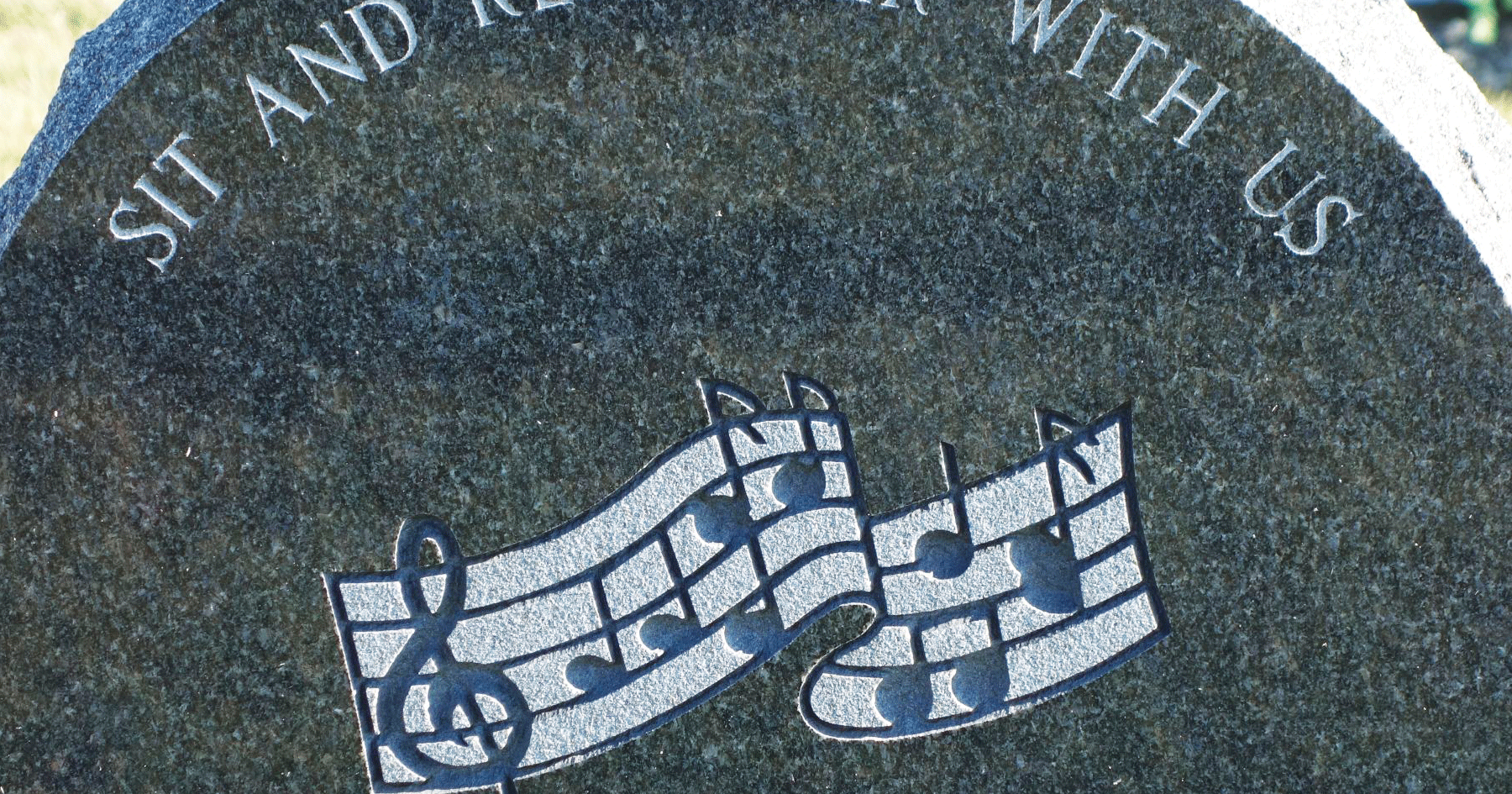
When thinking about funeral music one must consider a few things: Does the church have someone that plays for funerals? Is there a choir to help lead the congregational singing or perhaps a soloist to provide special music? If hymns are chosen will people actually join in the singing? Attendees come from various backgrounds so they may or may not be accustomed to singing at funerals. Talk to your priest. Clergy are generally open to these kinds of conversations and some parishes even keep your wishes on file.
At one time, funeral music was fairly standard, often dirge-like or overly sentimental, and not always uplifting. This no longer has to be the case. My goal here is not to judge one’s preferences, but to get people thinking about what they want their choices to reflect. Following are some considerations for choosing hymns:
- Look for themes of resurrection, comfort, and celebration
- Hymns that paraphrase a meaningful psalm
- A favourite hymn or song of the deceased
Over the years, I have sung at many funerals and have come across some interesting choices that are not hymns, but rather songs that were favourites of the person who died. I remember singing “You’ll Never Walk Alone” from Carousel and “Evening Prayer”, from Hansel and Gretel, and even a few operatic arias.
Another consideration is the readings. There are standard ones that often come up at funerals, but that is not to say you can’t choose others or even have a poem.
Ultimately, by making your preferences known and planning ahead you will be leaving your loved ones a gift, and that gift that will carry lasting and fond memories of you!