Life happens, and in the course of a day there are many pain points. Some are small—a missed appointment or a frustrating delay. Others are much heavier—a difficult diagnosis or a strained relationship. In these moments, our bodies tense, our thoughts race or go blank, and we may say or do things we later regret. Our sense of peace quickly disappears.
Is there a way to pray right in the middle of these moments?
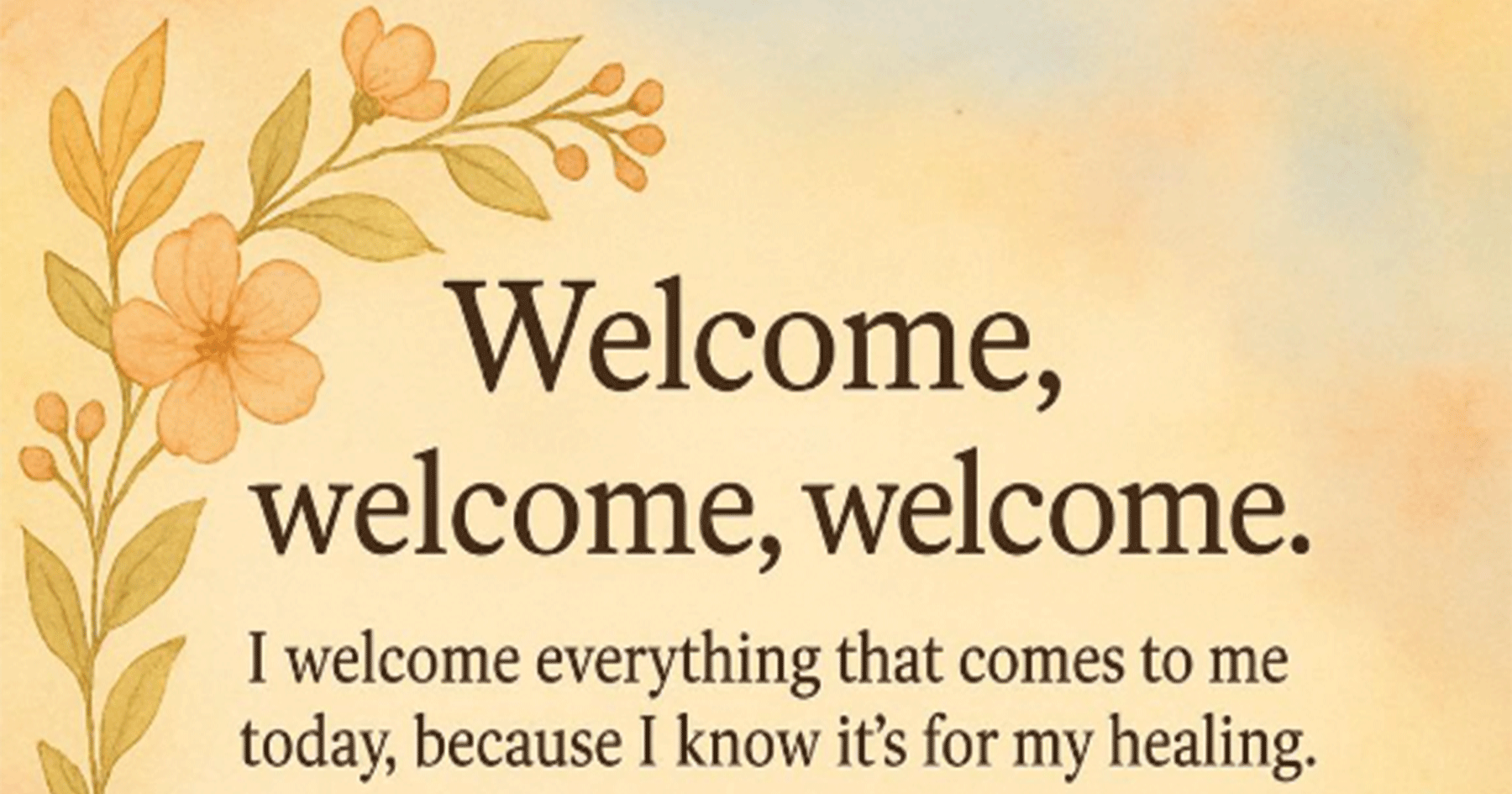
Welcoming prayer is a simple, contemplative practice designed for exactly this. It helps us turn toward God in the midst of daily stress, rather than waiting until later when things have settled down. It invites us to meet our thoughts, emotions, and physical reactions with openness instead of resistance.
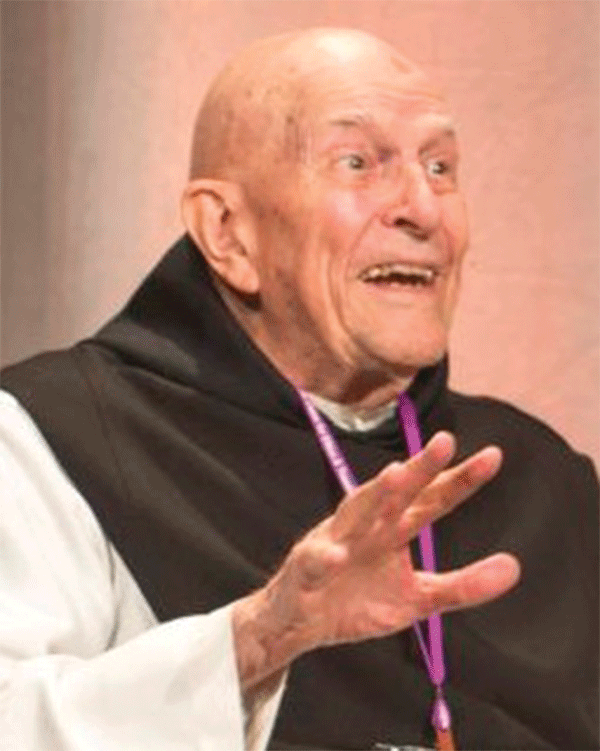
The roots of this practice are found in the teaching of Father Thomas Keating, a Catholic priest and contemplative teacher. He observed that each of us longs, at a deep level, to feel safe, loved, and in control of our lives. Over time, we develop ways of coping that help us feel this way. These strategies often serve us well—but only up to a point. Eventually, they fall short, and we find ourselves anxious, frustrated, or overwhelmed.
Welcoming prayer offers another way.
It begins with awareness. When something unsettles us, we pause and notice what is happening inside. Perhaps there is anxiety before a conversation, irritation in traffic, or sadness that lingers. We simply acknowledge what is present, without judging or trying to fix it.
Next, we “welcome” the experience. We pay attention to how it shows up in the body—tight breathing, clenched hands, a heaviness in the chest. Rather than pushing it away, we allow it to be there. We breathe into it. In doing so, we welcome God into that place, trusting that nothing within us is hidden from God’s loving care.
Finally, we let go. We might pray quietly: I let go of the desire for security, for approval, and for control. I let go of the need to change this moment. I embrace this moment as it is, knowing I am loved and never alone. Then we release the situation into God’s hands.
This prayer is not about fixing problems instantly. Instead, it helps us pause before reacting, creating space for a more faithful response. Over time, it can gently change us. We begin to see what drives our reactions and to rely less on our usual patterns.
Most importantly, welcoming prayer draws us back to a deeper truth: that our lives are already held by God. Even in moments of stress or uncertainty, we are not alone. We are known, loved, and cared for—just as we are.
♦ ♦ ♦
Mel Davis from Christ Church, Creston, belongs to the Spiritual Development Committee, which encourages people to grow ever deeper in relationship with God and to pray. As people across the Diocese pray, the ministries of the church will flourish! Amen.