“What sort of man is this,
that even the winds and the sea obey him?”
These words from Matthew chapter eight may be familiar to you, as this past little while we’ve been exploring the miracles and parables from Matthew’s gospel in the lectionary. The sea miracles, for me, are ones that have constantly piqued my interest since I was a little boy. Jesus calming the storm, and Jesus walking on water in some ways evoke an image of a super-hero God who commands nature and creation in unexplainable ways. For a child, perhaps these narratives gave me solace and comfort amid any storms and changing conditions that I experienced, growing up in the Arctic and on the East Coast.
Nevertheless, as I’ve matured, I find myself returning to these passages again and again, especially around the “Season of Creation.” When I was young, I liked the idea of a God who could control nature – summon lightning, disperse storm clouds, calm seas, and walk on water. Perhaps it was attractive to me because Jesus is fully human, and the idea that one could aspire to control that which is uncontrollable resonates. Imagine, calming storms so I could play outside whenever I wanted? Making it ‘always summer, never winter’ as a juxtaposition to Narnia in the first portions of ‘The Lion, The Witch, and the Wardrobe.”
It seems to me that for most of recorded history, humanity has endeavoured to control nature. We’ve redirected water sources, leveled mountains, built homes and edifices to create our own little worlds mostly apart from nature. Since the agricultural revolution, about 11,000 years ago, we’ve been domesticating plants and animals, shaping creation all around us – in many ways with little thought to the plight of nature, as if we are gods ourselves. Modern writers, anthropologists, and historians, including Jared Diamond, Elizabeth Kolbert, and Yuval Noah Harari speak of humanity living in the Anthropocene Era – an era starting roughly with the end of the Second World War, and defined by how humanity is now shaping ecosystems, climate, and geography more than nature affecting human evolution.
It seems so pertinent to me as I write this, seeing the reality of ash falling from the skies, a climate crisis in full swing with the West Kootenays having five seasons: the original four, plus fire season.
So in this Season of Creation I find myself lamenting the dreams of superhero-world-domination that I once had when I hoped the weather would respond to my every whim and God respond to my every prayer.
Accepting an Anthropocene reality means that we must take responsibility for the action and inaction that human societies have had: contributing to the destruction of ecosystems, species, and the degradation of the planet as a whole.
I applaud the work and mission of ecologists and activists, who are far ahead of the church in addressing policy change and advocating to nations, organizations, and industry in bringing change to human systems that affect the ecology of this beautiful, fragile island home we share.
For our part as communities of faith, it is true, we have not ignored things completely. We have incorporated into our liturgy, liturgical seasons, personal prayer, our song, our canons and our covenantal statements (Five Marks of Mission) an identification of the crisis that faces humanity, and our need to partner with God and with all others in humanity to right this wrong.
The ecological health of all we know is in jeopardy. I invite all to contemplate, learn, share, and act to both honour and safeguard creation. We are one species, one that has no more right nor claim on nature than any other.
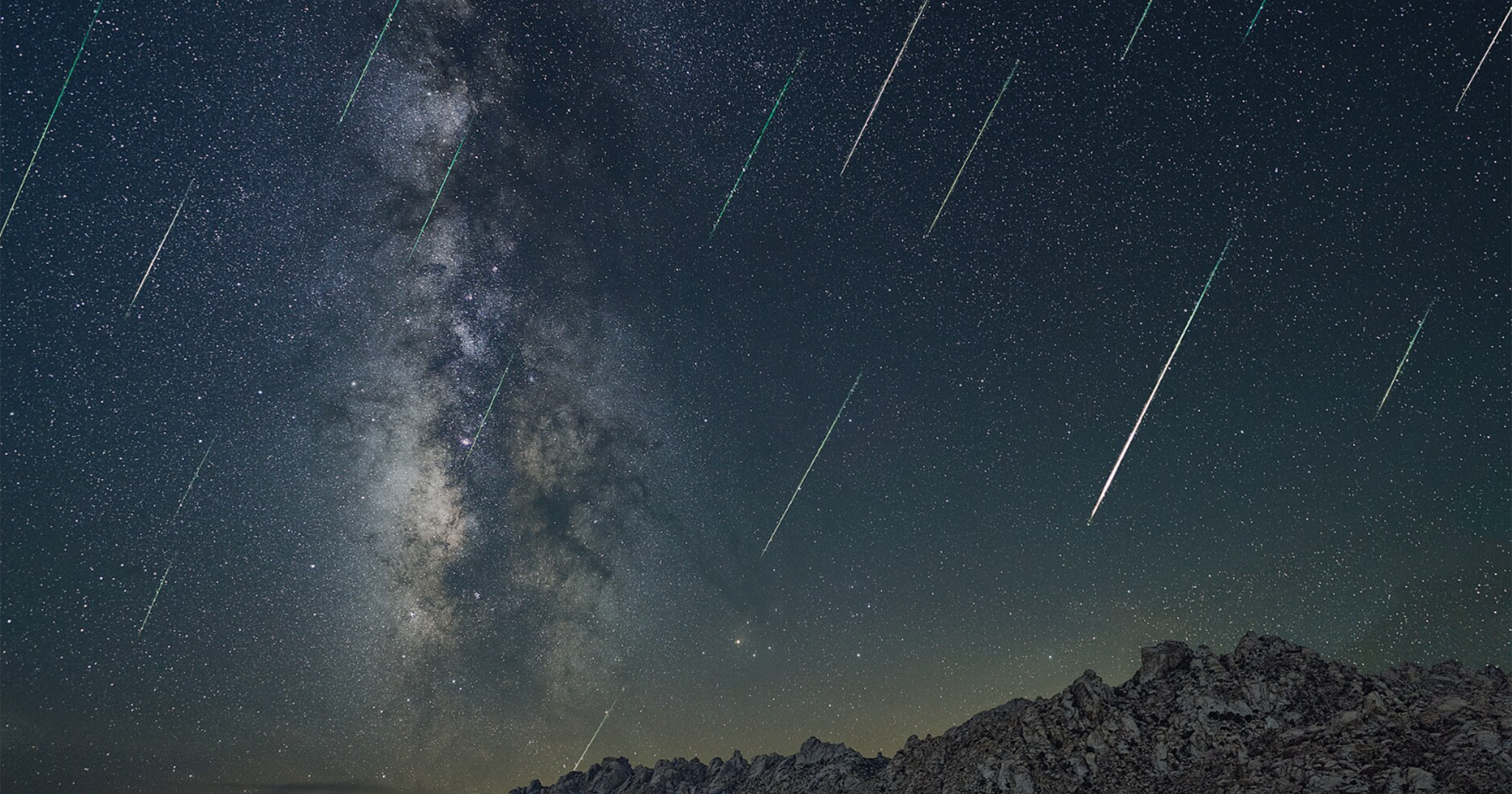
This August, amid the smoke and wildfire, heat and chaos, I hope to see the Perseids in the night sky. It will remind me of how small and insignificant I am in the immensity of all that God has created.
This August, amid the busyness of my days, I hope to stroll along the beach at Kokanee Creek Provincial park, and see the myriad signs of microscopic life amid the sand and the waves lapping on the shore.
This day, and all days, I hope to be transformed through the wonder of sky and sea, mountain and plain, through season, weather, and time. Transformed to remember I am God’s child, this is God’s world, and life requires me and all humanity to be in partnership with nature, rather than ruling over it in ruin and destruction.