
Reuniting a Disconnected Church
A number of years ago, when I was working with a Cathedral-based food program, we began to undertake significant changes to our meal service. Each and every change took shape in response to the following question:
How might we nourish our communities in ways that honour the agency, creativity, dignity, and worth of all who come to the table?
Like so many other churches, we had operated a charitable meal program for years. Over time, the program shifted and adapted in response to changing needs and changing leadership. Over time we lost touch with why we were doing what we were doing. What we desperately needed to do was ask how our fellowship at the meal program downstairs connected to our fellowship at Christ’s table upstairs?
And so, we began to ask this question as a way of inviting theological and practical reflection on a disconnect we were beginning to sense in our food delivery model. If food was more than fuel, and if people were more than their circumstances, were there ways that we might nourish more than the body? What about the head and the heart? What might happen if we stopped using a soup kitchen or food bank as the model that guided our imagination? What might happen if we started with our best experiences of a shared meal—a dinner party, a banquet, a wedding feast—and approached everything through that lens instead?
These questions caused us to reflect on each step of a person’s journey between entering the church building, receiving and eating food, cleaning up and leaving, asking “how do each of these typical interactions reinforce connection or isolation?” and “which of our practices contribute to a person’s honour, and which reinforce shame?”
As we did this, we became ever more aware of the ways different choices enforced distance between server and served. Locked doors, a windowless room, extra-wide counter-tops, plastic gloves, and plastic-wrapped sandwiches were all artifacts of our unspoken values. Our habits betrayed these values too. Rarely did volunteers sit down with those who had come in out of the rain to have lunch. When we finished our tasks, we stood around the perimeter of the room talking amongst ourselves. We observed the diners, but rarely did we join in. Instead, we waited until they left, and ate once we had once again locked the doors.
Somewhere along the way, the Rev. Liz Hamel, a deacon in the parish, started to refer to the diners as a congregation. Wherever she went, Liz would talk about her ministry with the “downstairs congregation.” For some, this was confusing at first. For others, it caught on. Her oft-repeated and prophetic observation helped to shift our understanding of what we were doing, and why.
Her words challenged us to move away from thinking about these meals as some sort of arms-length “outreach to those less-fortunate.” What she was helping us to see was that God was present, and that something holy—something eucharistic—was happening, if only we had eyes to see.
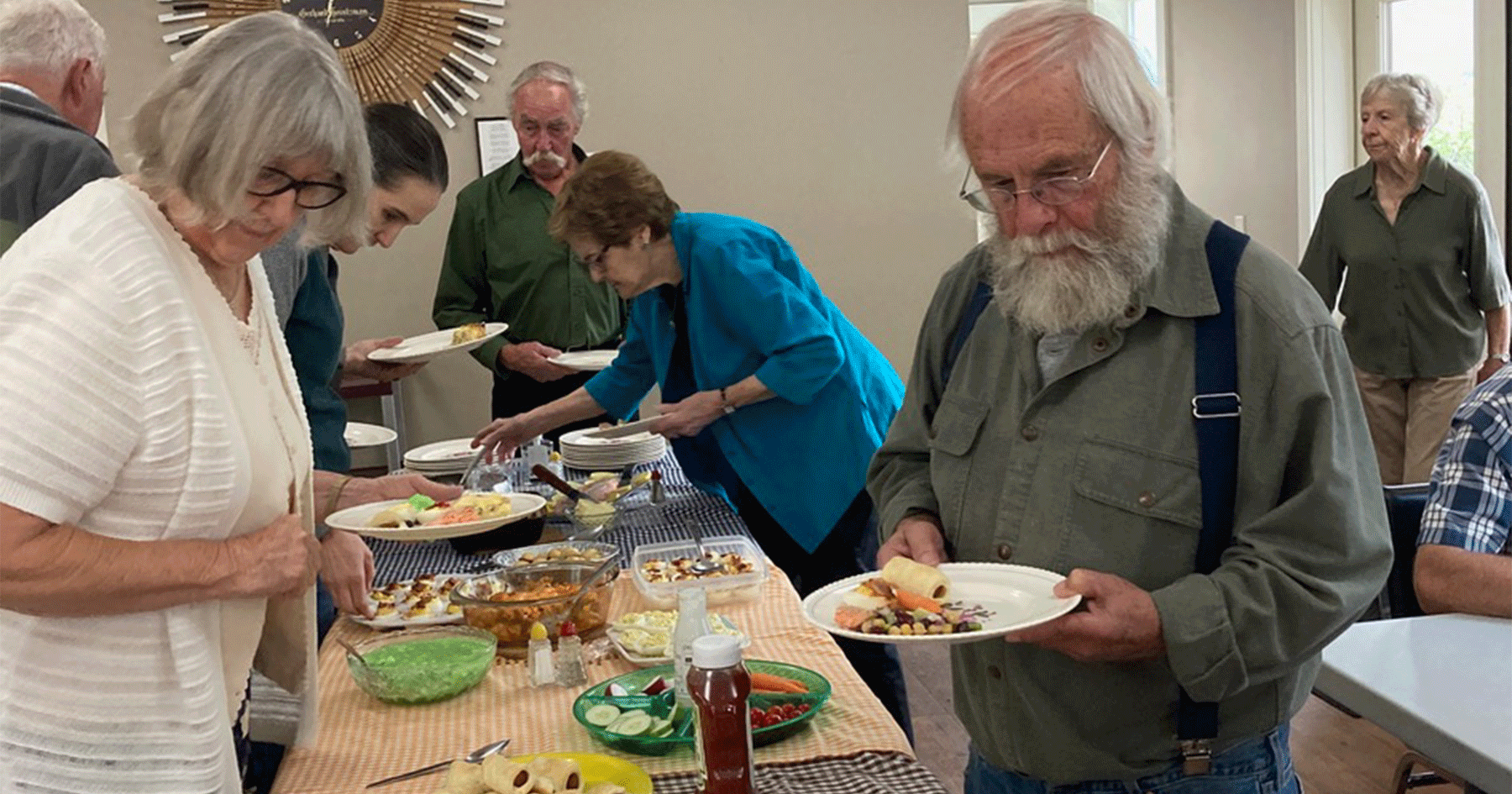
In some ways, Liz was helping us to understand that we were starting to embody an image the late Bishop Jim Cruickshank often shared. “We can be certain God’s Kingdom is near,” Bishop Jim would say, “when people who appear to have no business eating together are found joyfully sharing food at the same table.” When people are connecting with one another across dividing lines; when mutual transformation is taking place; we are being joined through Christ in God’s healing work.
None of this happened overnight, of course, but there were signposts along the way. Key to this transformation, I think, was a growing sense that we ourselves (those otherwise known as the leaders, the servers) were also members of this downstairs congregation. As we started to read ourselves into the question, we stopped only asking how we might nourish others. We began to ask more frequently how we and how other members of the Cathedral’s congregations might find nourishment too.
I can still remember how in the early days of this transformation, our meal team was asked to serve dinner for a church event. As the meal was coming to a close, I heard a number of parishioners at a nearby table groaning about the food. I could feel myself turning beet red when I heard one person ask the others, “Can you believe they make us eat the same food they serve the homeless?”
The very next year, nearly everyone attending the event had something positive to say about the food. The thing is, we hadn’t gone out of our way to make something special for the evening crowd that night. After some time processing the complaint and working through our feelings, we were also able to hear something of God’s invitation. If the food we served wasn’t good enough for one of the congregations, it wasn’t good enough for any of them. That moment, as hard as it was, led to increased food quality, and another way of honouring each one who came to the table.
What I remember most about that season was the way these downstairs transformations rippled out, and contributed to transformation elsewhere. At Thanksgiving, we decorated the Church as usual. But this year, it was decorated with food, and plenty of it. Stock pots and coffee urns were interspersed with packages of lentils, beans, and canned tomatoes. Sugar pumpkins, leeks and butternut squash replaced decorative gourds. Framed pictures from a community art project could be seen by all. Carrots and apples, garlic, kale, and beets were all on display, the basis for the following week’s menu.
Looking around the church that day, it felt as though something special was happening. It felt as though little by little, bit by bit, two things that ought to be together were being put back together. We hadn’t put an end to income disparity leading to poverty. We hadn’t solved the affordability crisis. We hadn’t fed the entire city, but something was happening. Food was being paired with honour, and faith with justice.
What’s more, that Sunday we found one more way of embodying the kind of gratitude that Jesus invites us disciples into: “freely you have received; freely give (Matthew 10:8).”