
The world is in crisis, but it’s a crisis and a worldview that many of us in the church don’t understand, let alone recognize. Here’s why: we’re caught up in this crisis too. It’s the very water we’re swimming in.
Famed Canadian sociologist Charles Taylor calls this the “Immanent Frame.”
The world we live in is a world where faith is not assumed, where transcendence is optional, where the divine doesn’t show up, and where religious claims must make sense within everyday experience. Sure, we pray and gather for worship, but as Bishop Susan Bell of the Diocese of Niagara noted in her opening address to this year’s Missional Imagination Conference, “when decisions are made, they’re shaped more by anxiety than by trust, more by fear of loss than by fear of hope in God’s abundance.”
Many of our churches are in maintenance mode. We want to preserve something that has been important to us. And to a certain extent, there’s nothing wrong with that. And yet God calls us, invites us beyond the walls of the places we gather to be in mission for others. As Bishop Susan observed,
“Maintenance asks how do we keep things going? How do we manage decline? How do we protect what’s left? Mission asks where is God already at work? Who is our neighbour now? What is God inviting us to let go of so that new life can emerge.”
Jesus’ invitation to join him in mission – to be followers, practitioners, daring disciples – asks that we cultivate, in Bishop Bell’s words, “A willingness to be led somewhere we haven’t yet been.”
On 2000’s “Red Dirt Girl,” Emmylou Harris sings:
“My baby needs a shepherd
She’s lost out on the hill”
We live in a world where many have never heard the name of Jesus, let alone experienced healthy Christian community. There are plenty more who have been dechurched, people we have pushed out of our communities by things done and left undone. Harris’ song speaks of a mother’s love for a child. And yet, in my Lenten pilgrimage, and in the wake of a ecent conference, I hear its resonance with the life of the church. I hear the longing many of us have for the return of the children no longer here.
“Too late I tried to call her
When the night was cold and still”
The song suggests that the efforts to prevent this loss come too late, perhaps before she even knew there was a problem. Perhaps she should have reached out in the daylight hours. It is night. It is dark. She hasn’t found what she’s looking for, yet she keeps up the anxious search.
“And I tell myself I´ll find her
But I know I never will
My baby needs a shepherd
She’s lost out on the hill”
Longing and regret appear repeatedly when sings, “I guess I could have carried her,” and in a later verse, “somewhere on the highway let go of her hand.” She wonders what she could have done differently, calling on intercessors to bring the child home – an angel, a pilot. And yet, in the chorus, the song settles on the child’s need for a mother, offering to trade every earthly good for one more experience of the intimacy of a bedtime ritual:
“Toora loora loora lo
First the seed and then the rose
Toora loora loora li
My kingdom for a lullaby”
Is this nostalgia? Is it love? Like Jesus’ parable of the prodigal, this mother continues to watch and wait, continues to search for a child long gone. She will go to the ends of the earth, trade every earthly possession for her child’s safe return, all the while knowing her baby, “will have to go this one alone, after all that is the only way she’s ever known.”
Our worry, like that of the song’s mother, is understandable. And yet I wonder how, as a church, we might be shaped more by trust than anxiety, more by fear of hope in God’s abundance than fear of loss. Our babies, our children, the future of the church needs a shepherd. They need a shepherd, and so do we. This song takes us over rough hills and through shaded valleys, and in the end, is a call to let go. It’s a call to take faithful risks. It’s a call to trust. It’s a call to live life with an open hand.
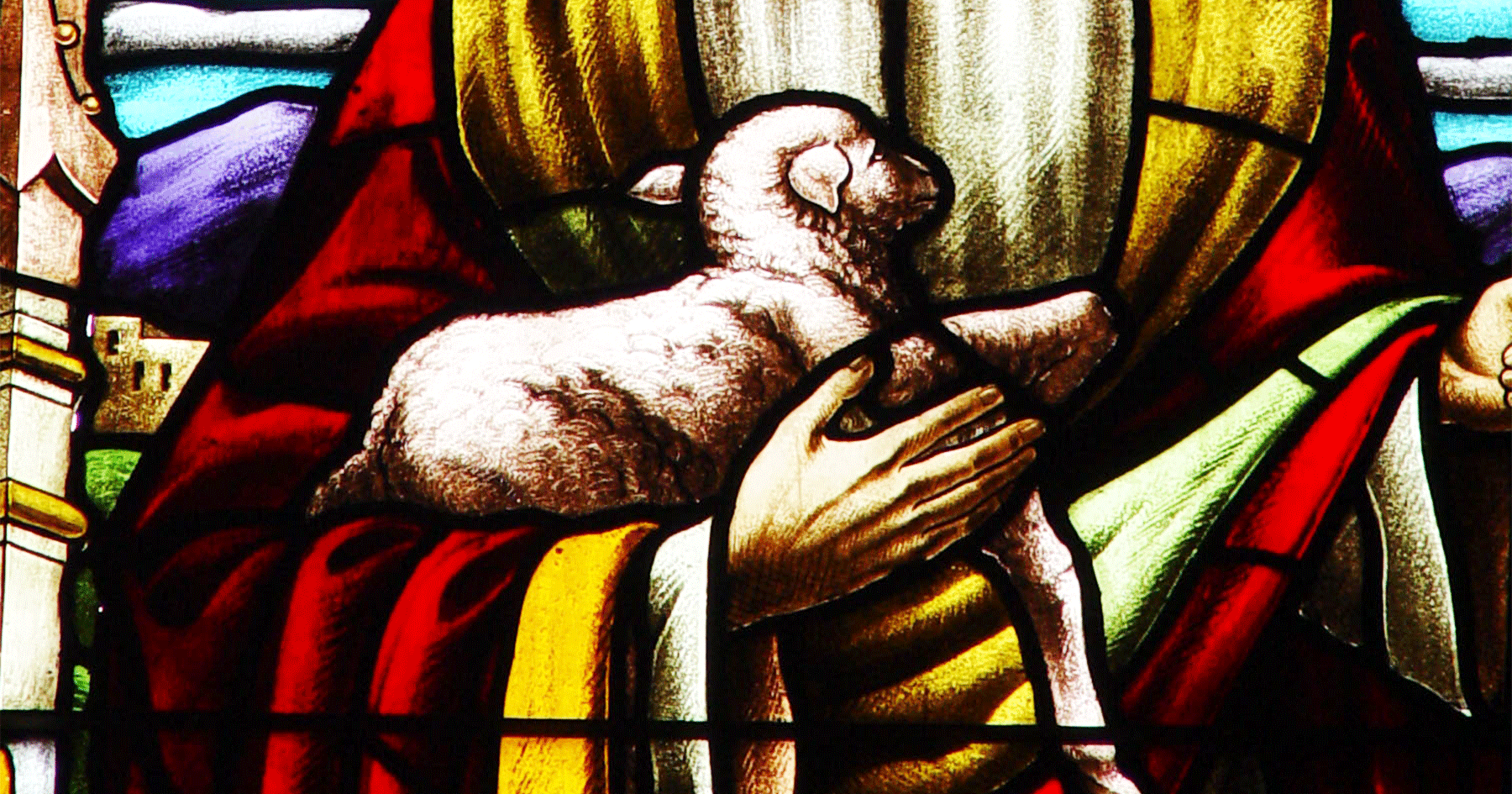
Our babies need a shepherd. We all need a shepherd whose voice and whose invitation we listen for. And even though we worry, I am comforted by Jesus’ words in John’s gospel when he reminds us, “I have other sheep that are not of this fold.”
Our babies have a shepherd. We all do. What I’m learning through this Lenten season is how important it is to listen for the voice of the Shepherd, the one who “walks with me, and talks with me, and tells me I’m his own.”