
A few years ago I opened a November column in the Castlegar News with the claim that “November is a time to remember.” Looking back on that moment, I wish that I had followed them up with these: “Remembrance is not a passive act.” Remembrance, at its best, is a defiant, subversive, and communal act.
We begin the month of November with the remembrance of All Saints and All Souls, not merely to look back on the past, but to invoke their presence, to bring their life and witness and prayers on our behalf into the present. All Saints and All Souls remind us that we are not simply a community of the living, but a communion of saints—of the living and the dead—a communion of those being raised to new life in Christ. That is to say, our ancestors, dearly departed, are still a part of our story, and we a part of theirs.
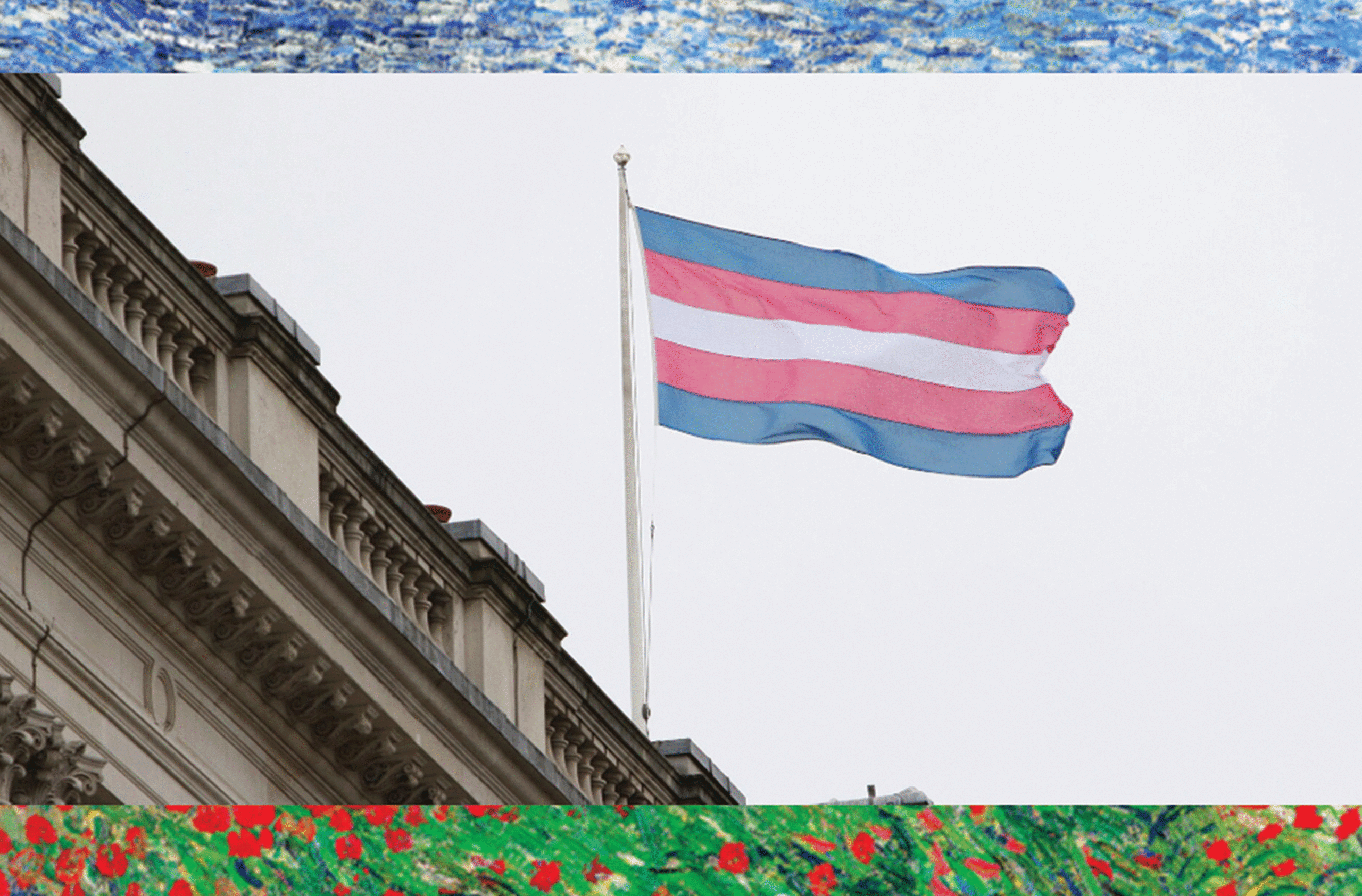
Later this month, communities across the country, and throughout our Diocese will come together to mark the Transgender Day of Remembrance (November 20th). This is a day to remember and honour the names, the lives, and the stories of transgender people who have lost their lives over the last year.
This is important.
In a world of increasing violence against our queer and trans siblings, it is vital that we remember. To remember isn’t simply the act of not forgetting. To re-member is to put back together two things that belong together that have been dis-membered. The act of re-membering is to embody the promise and the call of the body of Christ (Or as St. Paul writes, “Can the eye say to the hand, I have no need of you?”).
When it comes to the Trans Day of Remembrance, we are not simply speaking of those who have lost their lives as if their lives have been somehow misplaced. The lives we honour have been ended by people and systems who have weaponized their discomfort rather than seeking understanding. Even though I wish it weren’t so, the steady rise in anti-trans bigotry and violence across the continent, and the way it plays out in our own political discourse, seems to suggest that we are a long way from understanding.
As I write these words, I do so in full knowledge that much violence has been done to our trans siblings in the name of God by people who claim the same faith I do. So what might we do—whoever we are, and whatever our gender identity—who seek to love God and our trans neighbours too?
To start, we must weep.
We weep with those who weep. We allow the tears of our trans neighbours to crack our hearts open. We weep at the violence being done. We weep at these lives, beloved of Creator, cut short too soon. We weep at the holes left in our community with each successive death.
We weep, and then we confess.
We confess our own complicity. As individuals, as communities, and as the church. We confess that we have done and continue to do harm. We confess that we have left undone those things which we ought to have done. We confess that we have done those things which we ought not to have done.
We confess, and then we resist.
We resist by seeking understanding. We resist by opening ourselves to listen and learn from the stories of our trans neighbours and their ancestors, those who have come before. In our churches, we resist the theology that kills—any theology that suggests that God’s trans children are any less beloved because of how they were created.
We resist by believing and proclaiming a love that liberates all people, and by living as though it’s true.