What are your rituals of gratitude? How do you embed thanksgiving into your prayer life? How do you stay quiet enough to become aware of the abundance around you, of the astounding gift of life, what the Jewish mystic Abraham Joshua Heschel calls “the sublime wonder of being” which calls us to “Radical Amazement”? How do you pay attention in a way that nurtures thanksgiving as a natural and essential part of your ongoing conversation with God?
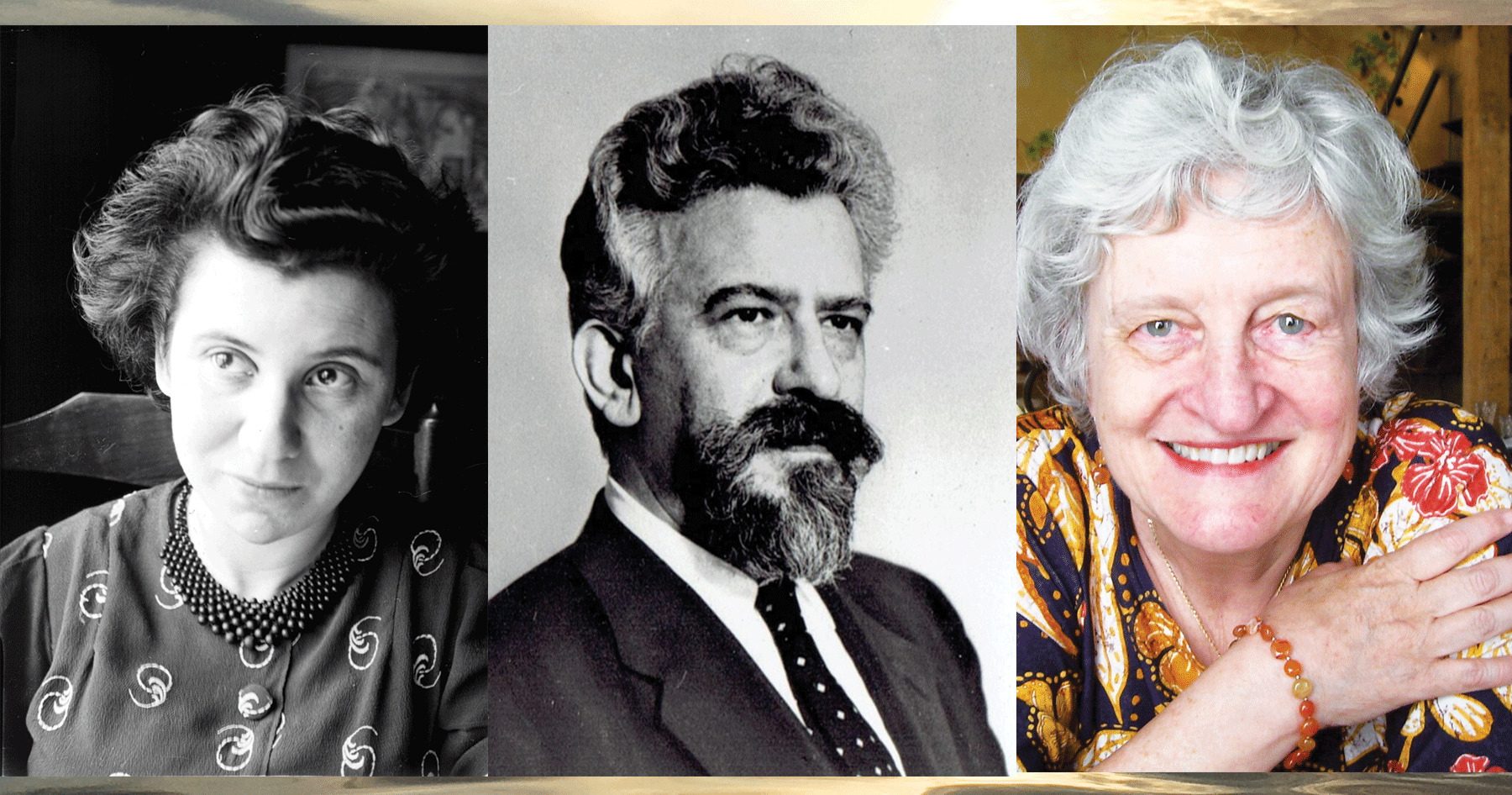
One of the most insightful books I have read on gratitude is “The Gift of Thanks: The Roots and Rituals of Gratitude.” Canadian classicist Margaret Visser, a social anthropologist, looks at the rituals of gratitude across centuries, cultures and religions. (You may remember her as a frequent contributor on CBC radio in the 80s and 90s, and the Massey Lecturer 2002)
She explores in depth what the Christian faith has contributed to the concept of gratitude, the idea of grace, “the self-communication of God to human beings; their experience of God.” Grace is a gift, “unexpected – often over and above what was previously thought possible – and unmerited.” (page 376) Because grace is spiritual, it offers a fullness that cannot be reached with any material satisfaction. “Grace is overflowing, abundant, always enough. It is experienced as dynamic, energetic, supple, joyful, enabling, and generous to the point of extravagance. Where a quiet virtue such as patience is needed, grace provides the strength to be patient.”
Freely given, grace invites our response of gratitude. Gratitude requires paying attention, what spiritual leaders and mystics often call us to: an attitude of mindfulness. (How often Jesus invites us to “stay awake.”) Visser explores the French word for gratitude (reconnaissance); the same word also means “recognition.” If you are interested in the history of cultural rituals of giving thanks, this book is a rich and fascinating read. She frequently quotes the mystics, of many faiths. She delves into the insight that constant giving thanks to God transcends the situation. In 1 Thess. 5:18, St. Paul urges us to give thanks to God in all circumstances. I was moved by the story of Etty Hillesum, the Jewish mystic who gave spiritual consolation to people in Dutch concentration camps and died in Auschwitz. She wrote this prayer in her diary:
“You have made me so rich, oh God, please let me share out
Your beauty with open hands. My life has become an uninterrupted
dialogue with You, oh God, one great dialogue. Sometimes
when I stand in some corner of the camp, my feet planted
on Your earth, my eyes raised toward Your heaven, tears sometimes
run down my face, tears of deep emotion and gratitude.
At night, too, when I lie in my bed and rest in You, Oh God,
tears of gratitude run down my face, and that is my prayer…”
Page 332 from Hillesum, Etty. (1914-1943) “An interrupted life. The Diaries, 1941-1943, and Letters from Westerbork.” Translated by Arnold J. Pomerans. New York: Henry Holt, 1996
Visser observes that in our gratitude it is essential to truly appreciate the earth itself. The work humanity needs to do together now in addressing the climate disaster we have caused and calls for “grateful wonder at the world’s magnificence and vulnerability.” (Visser p. 362)
May this Autumn be a time of deepening Gratitude.